
A clearer next step for skin concerns
Skin Health Care in Northern Virginia
WheelHouse Health evaluates common skin-health concerns through telehealth when they can be assessed safely and in person when a closer examination, testing, procedure, or specialist evaluation is needed.

Common concerns
Evaluation guided by the history and what can be seen safely.
- ✓Acne and recurrent breakouts
- ✓Eczema, dermatitis, dry or sensitive skin
- ✓Rashes, irritation, and inflammatory changes
- ✓Selected minor infections or superficial skin problems
- ✓Stable medication- or product-related reactions
- ✓Follow-up of previously evaluated skin conditions
New, changing, bleeding, irregular, deeply painful, or rapidly spreading lesions may need in-person examination, dermoscopy, biopsy, a procedure, urgent care, or dermatologist referral.
Telehealth fit
Can skin health be assessed virtually?
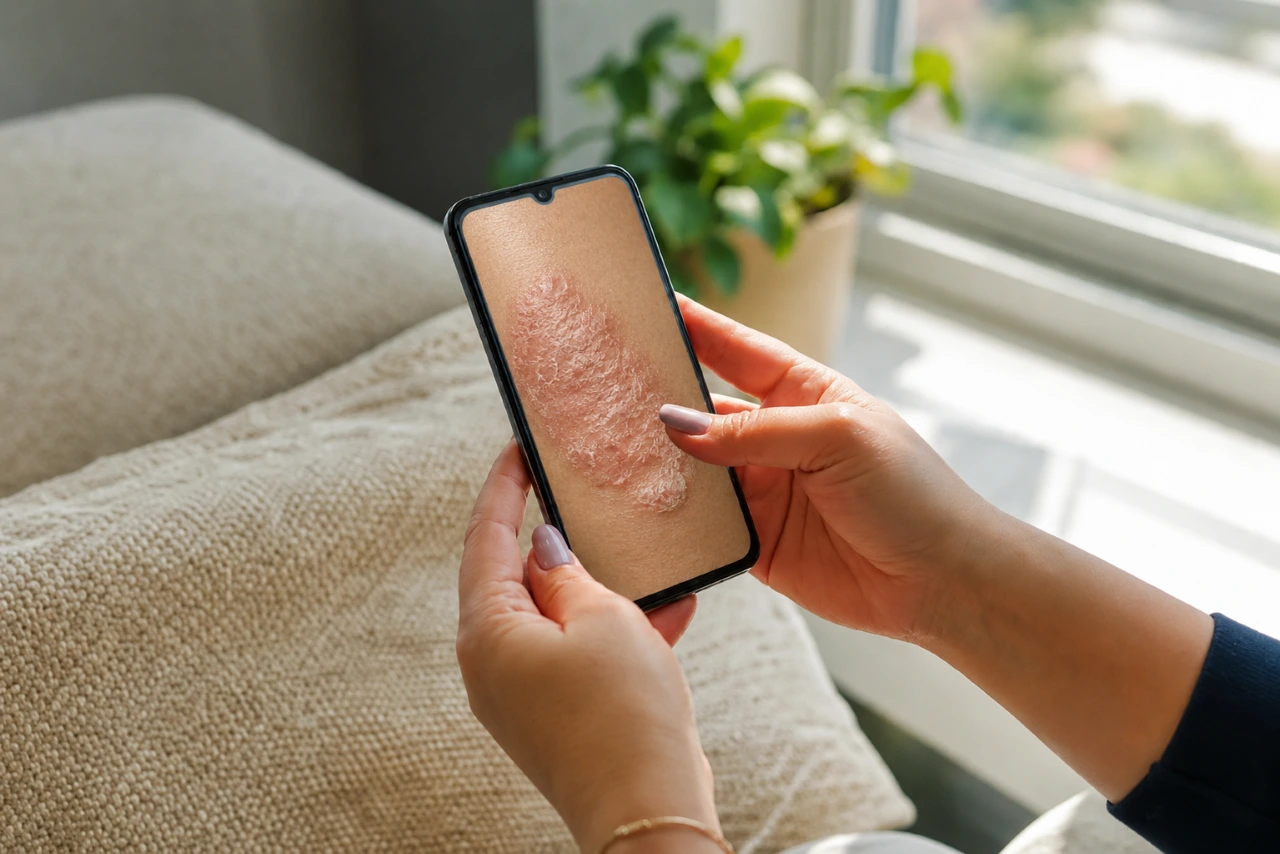
Telehealth can help with selected visible concerns when you can provide a clear history and the affected area can be seen adequately through secure video or approved images.
Lighting, camera quality, skin tone, lesion depth, texture, tenderness, and subtle changes can be difficult to assess remotely. If a safe decision cannot be made, in-person care or referral will be recommended.
Your visit
From symptom history to a practical monitoring plan.
- ✓Timing, changes, itch, pain, drainage, fever, triggers, exposures, and prior treatments
- ✓Relevant medical history, allergies, medications, and products
- ✓Secure visual examination or direct in-person assessment
- ✓Treatment and skincare recommendations when appropriate
- ✓Instructions for monitoring and follow-up
- ✓Referral for biopsy, procedure, specialty care, or urgent evaluation when needed
Secure images
Do not send clinical photos through the public contact form.
If images are needed, use the secure patient system or another method provided by WheelHouse Health. Photos support the clinical history; they do not always replace an in-person examination.
Common questions
Skin Health Care FAQs
Clear answers before you decide what kind of care you need.
Can you prescribe acne or eczema medication?
Medication may be prescribed when clinically appropriate, legally permitted, and supported by the evaluation. The choice depends on severity, prior treatment, other medications, allergies, and monitoring needs.
Can you diagnose a mole by video?
A virtual visit may help determine whether a lesion needs in-person care, but video cannot replace dermoscopy, palpation, biopsy, or pathology when those are needed.
Should I send photos before the appointment?
Only through the secure method requested by WheelHouse Health. Include the history of the change, not just a photo.
Can you treat a rash when the cause is unknown?
A clinician can evaluate the history and appearance and may recommend treatment or next steps. Some rashes require testing, an in-person examination, or specialist care.
Complete care guide
Primary-care skin-health evaluation with clear virtual and specialist boundaries
Common rashes, irritation, acne, eczema, and selected visible concerns may be appropriate for a primary-care visit. Safe skin care also means recognizing when direct examination, testing, dermoscopy, biopsy, a procedure, urgent care, or a dermatologist is the better next step.
Use the contents list to move directly to the question or decision that matters to you.


Know the service
Skin-health care can answer common primary-care questions without claiming to replace dermatology.
Skin concerns are among the most visible health problems, yet appearance alone rarely tells the full story. Timing, symptoms, body location, exposures, products, medications, prior episodes, other health conditions, and the way a change has evolved can all affect the assessment. A primary-care skin-health visit brings those details together and decides whether an initial plan can be made safely.
WheelHouse Health may evaluate selected acne, eczema, dermatitis, rash, irritation, and follow-up concerns through telehealth or available hands-on care when they fit current scope and the individual clinical situation. The route retains “dermatology-services” in its URL for continuity, but the patient-facing service is skin-health care. It should not be understood as a claim that a dermatologist, dermoscopy, biopsy, pathology, or a comprehensive specialist skin examination is available through the practice.
A useful visit may result in education, monitoring, an appropriate treatment discussion, direct examination, testing, a procedure elsewhere, urgent care, or dermatologist referral. The goal is not to force a diagnosis from a photograph. It is to identify what can be assessed, what remains uncertain, and which next setting has the information and tools the concern requires.
The story behind the appearance
Prepare a timeline, not just a close-up image.
Before the visit, note when the concern first appeared, where it began, how it spread or changed, and whether it itches, hurts, burns, drains, bleeds, blisters, or affects how you feel overall. Think about new medications, supplements, skincare or hair products, detergents, adhesives, plants, animals, travel, work exposures, illness, household contacts, and prior treatments. Do not assume any one exposure is the cause; the timeline simply helps the clinician compare possibilities.
Prepare a current medication and allergy list, including creams, ointments, cosmetics, over-the-counter products, and supplements. Bring relevant prior diagnoses, test or pathology reports, and the name of a dermatologist or other clinician who previously evaluated the area. If a treatment helped or worsened the concern, identify the exact product and how it was used rather than describing it only by color or packaging.
Share this information through the designated clinical system. Ordinary email, public contact forms, text messages, and social media should not receive clinical photographs or detailed health histories. If the practice requests images, follow its instructions for the approved channel, framing, lighting, and scale. Images support the history but do not replace the parts of examination that cannot occur remotely.
- When and where the change began
- Symptoms, pattern, spread, and pace of change
- Products, medicines, exposures, and prior episodes
- What was tried and how the skin responded
Telehealth for visible concerns
A camera can show pattern and distribution, but not every feature that matters.
Telehealth may work for selected skin concerns when the patient can provide a clear history and the affected area can be viewed adequately. The clinician may ask for a broader view to understand distribution and a closer view for detail, or may ask the patient to describe texture, tenderness, warmth, or how the area changes with pressure. Only follow requests that can be performed comfortably and safely.
Screen color, room lighting, camera processing, focus, scale, and internet quality can change appearance. Video cannot reliably provide palpation, temperature, depth, fluctuance, sensation, dermoscopy, complete examination of difficult locations, biopsy, culture, scraping, or pathology. Skin tone can also be rendered inaccurately by cameras and displays. A technically clear image is not the same as complete clinical evidence.
If the missing information could change the decision, the clinician may recommend an in-person visit or dermatologist assessment before diagnosing or prescribing. Telehealth can still be useful for triage, follow-up of a previously evaluated condition, product or medication discussion, and deciding how quickly direct care is needed. Patient identity, physical location, consent, clinician authorization, and clinical appropriateness must still be confirmed for the encounter.
For follow-up images, consistency can help the clinician compare change: similar lighting, distance, angle, and an approved scale may be requested. Do not edit color, apply beauty filters, crop away the surrounding skin, or send only the most dramatic view. Keep the original files in the designated system when instructed. Even consistent images remain supporting evidence; a concern that looks unchanged may still require direct assessment because symptoms or deeper findings have changed.
Do not include another person, identifying documents, or unrelated body areas in an image unless clinically necessary and specifically requested. Ask how long images become part of the record and who can view them. If you cannot photograph the area safely or privately, say so; direct examination may be the better option.
It cannot confirm every lesion, infection, circulation issue, depth, texture, or diagnosis. Expect hands-on care when those details matter.
Reasons to ask for evaluation
Describe the pattern and effect rather than trying to diagnose yourself.
Patients may seek primary-care help for acne or recurrent breakouts, eczema or dermatitis, dry or sensitive skin, rashes, irritation, selected superficial infections, reactions to products, or follow-up of a previously evaluated condition. These labels overlap, and a similar appearance can have different causes. The booking category does not establish the diagnosis or guarantee that virtual assessment will be enough.
Explain how the concern affects sleep, work, comfort, movement, or daily care. Note whether it is localized or widespread and whether other people in the household have symptoms. The clinician may ask about fever, breathing, swelling, mouth or eye involvement, pain, drainage, medication changes, immune status, pregnancy, recent procedures, or travel because those details can alter urgency and treatment safety.
Some requests fall outside routine skin-health care. A lesion needing dermoscopy or biopsy, a complex hair or nail disorder, suspected skin cancer, a severe medication reaction, a deep infection, a rapidly progressing wound, or a concern requiring a procedure may need a dermatologist, surgeon, urgent-care center, emergency department, or another specialist. Referral is often the appropriate clinical outcome, not an incomplete service.
- Acne and recurrent breakouts
- Eczema, dermatitis, dryness, and irritation
- Selected rashes and superficial concerns
- Follow-up when the original diagnosis and plan are available
Reduce guesswork
Product lists and exposure timing are more useful than a cabinet full of new remedies.
People often respond to a skin change by adding several cleansers, creams, oils, supplements, spot treatments, or home remedies at once. That can make the original problem harder to interpret and can add irritation or allergy. A clinician needs to know what touched the skin, when it was introduced, how often it was used, and what changed afterward. Bring product names or clear ingredient labels when requested.
Do not start, stop, mix, or apply a treatment solely because it is popular online or described on a general page. “Natural,” “medical grade,” “hypoallergenic,” and “dermatologist tested” do not guarantee that a product is appropriate for a particular person or concern. Prescription and nonprescription topical products can still cause irritation, allergy, interactions, or problems when used on the wrong area or for the wrong condition.
The visit may help simplify the routine, identify a possible exposure worth avoiding, or determine that testing or specialist evaluation is needed. The plan should explain what to use, where, how often, for how long, and what change should prompt reassessment. This page intentionally does not provide a universal skincare regimen because age, skin type, diagnosis, pregnancy, allergies, medications, and body location all affect what is safe.
Treatment decisions
Medication depends on an adequate evaluation and a plan for safe use.
A skin-health visit may include discussion of an eligible prescription when clinically appropriate and legally permitted. The choice can depend on the working diagnosis, severity, body area, age, pregnancy considerations, allergies, prior response, other medications, infection risk, and the monitoring the treatment requires. Booking the visit does not guarantee a cream, antibiotic, acne medicine, steroid, refill, or any other prescription.
Refill requests need context. A product that was reasonable for one episode may not be appropriate for a new eruption that looks similar. Long-term or repeated use may require reassessment, laboratory monitoring, dose limits, or specialist oversight. Bring the exact name, strength, instructions, and actual use, and explain whether it helped, caused side effects, or stopped working.
If a medication is prescribed, clarify the intended area, duration, follow-up, precautions, and what should prompt earlier contact. Do not share prescriptions or use leftover medication from another person or condition. If the clinician cannot make a safe remote decision, an in-person examination, testing, records, or referral may be required before treatment.
The appointment provides evaluation. Medication is offered only when supported by the findings, monitoring, clinician scope, and applicable law.
When the screen is not enough
Direct examination, testing, biopsy, or specialist review may be the most useful next step.
In-person care may be needed when the clinician must feel the area, assess temperature or tenderness, examine a difficult location, use magnification or dermoscopy, collect a specimen, evaluate drainage, or compare the concern with the rest of the skin. Some visible changes need biopsy and pathology before they can be identified. Telehealth cannot replace those tools.
WheelHouse Health may offer selected hands-on assessment depending on patient location, clinical need, current scope, environment, and schedule. It does not promise dermatologist services, skin cancer screening, biopsy, pathology, surgery, or every procedure. The practice may direct patients to dermatology, urgent care, emergency care, wound care, podiatry, allergy, infectious disease, or another service when the concern requires different expertise or equipment.
Ask how urgent the referral is, what records or images should be sent, who will place or receive the referral, and whether the specialist accepts the patient’s insurance. Outside organizations control their own pricing, scheduling, coverage, and availability. If the concern worsens while waiting, use the escalation instructions from the evaluating clinician rather than assuming the original timeline still applies.
Do not wait for routine care
Rapid change, severe symptoms, or whole-body illness can raise the urgency.
Seek timely clinical assessment for a rapidly spreading rash, severe pain, significant swelling, worsening drainage, fever, involvement of the eyes or mouth, widespread blistering or peeling, a concerning medication-related change, or a lesion that is rapidly changing, bleeding, or not healing. These examples are not a diagnostic checklist and cannot determine the right level of care from a webpage.
Breathing difficulty, swelling of the lips or tongue, fainting, severe weakness, confusion, or another potentially life-threatening reaction requires 911 or immediate emergency care. Do not wait for an image review, portal message, email reply, or routine appointment. Some people may show less typical signs because of age, immune status, reduced sensation, or medication, so the overall condition matters.
A photo that looks reassuring cannot overrule severe symptoms. Likewise, an alarming image may not capture the true cause. Use real-time clinical services when the situation is changing quickly. If a previously assessed concern worsens, follow the individual escalation plan and identify that this is a change from the earlier evaluation.
For a possible emergency, call 911 or seek immediate emergency care. Do not wait for the practice to review a photo or message.
Prepare for a useful visit
Book with a clear timeline, complete product list, and openness to hands-on care.
Use the official booking system for a non-emergency skin-health concern. Complete the requested clinical history through the designated intake. If images are requested, use only the approved patient channel and include the views and context specified by the practice. Do not send medical photographs to public email, a contact form, text, or social media.
Prepare the timeline, symptoms, affected locations, medication and allergy list, skincare and household products, exposures, prior episodes, and treatments tried. Bring complete prior reports or pathology when relevant. Think about the decision you need: whether telehealth is enough, whether a medication still fits, whether the concern needs direct examination, or how quickly specialist care should occur.
After the visit, follow the individualized plan and clarify the duration, monitoring, follow-up timing, and escalation route. Do not generalize the plan to a different person or a future skin change that only looks similar. Service format and eligibility are confirmed case by case, and a visit does not guarantee a diagnosis, prescription, procedure, specialist appointment, or outcome.
Book an appropriate non-emergency skin-health concern, then let the history and findings determine whether virtual care, hands-on assessment, testing, or referral is needed.
Start here