
A more personal care model
About WheelHouse Health
WheelHouse Health is an NP-led healthcare practice designed to make primary care more accessible, personal, and easier to navigate. We provide telehealth across Virginia and select in-person and home-based services in Northern Virginia.
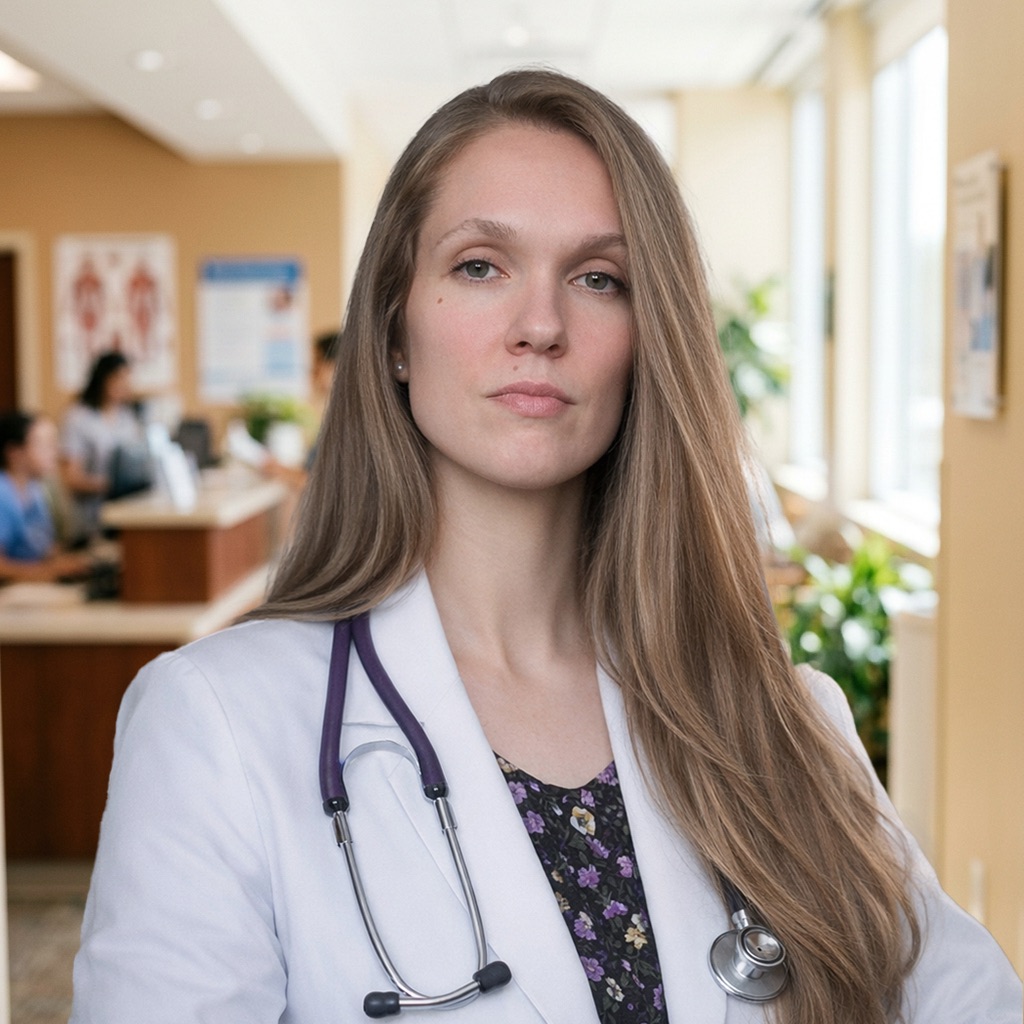
Meet your clinician
Lydia M. Wheeler, NP-C
Lydia M. Wheeler, NP-C, is the founder and clinician behind WheelHouse Health. Her practice experience includes acute care, cardiology, chronic disease management, wound care, and aesthetics.
Her approach combines evidence-informed decision-making with patient education and continuity. The goal is for every patient to understand what to monitor, what to do next, and when a change in symptoms should prompt faster care.
WheelHouse Health also recognizes the limits of virtual medicine. When a hands-on examination, testing, imaging, a procedure, urgent care, or emergency evaluation is needed, patients are guided toward the appropriate setting.
Why WheelHouse Health
Healthcare questions deserve more than a rushed answer.
What does this lab result mean? Is this symptom appropriate for telehealth? Do I need an examination? Should this medication be adjusted? Patients often have reasonable questions that do not fit neatly into a short visit.
WheelHouse Health was created to make those conversations easier to access and understand, combining convenient virtual care with ongoing relationships, preventive planning, chronic-care support, and select in-person services.
What to expect
Clarity, continuity, and the right care setting.
- ✓A clear explanation of what can and cannot be addressed through telehealth
- ✓Time to review symptoms, history, medications, home readings, and relevant records
- ✓A practical plan for treatment, monitoring, testing, follow-up, or referral
- ✓Electronic prescription support when clinically appropriate and legally permitted
- ✓Respect for the boundary between routine care and urgent or emergency symptoms
Our approach
Personalized care has a simple rhythm.
02
Explain the plan
Make the purpose of testing, treatment, monitoring, or referral clear.
03
Follow through
Continue with lab review, medication monitoring, preventive care, and coordination.
04
Use the right setting
Choose virtual, in-person, home-based, urgent, or emergency care according to need.
Verify credentials
Trust should be checkable.
Patients can verify current Virginia healthcare licensure through the Commonwealth’s official, real-time lookup. Search using the clinician’s licensed name and profession category.
WheelHouse Health can provide the current certification issuer and exact credential details on request. Service availability and scope are confirmed for the individual patient and visit.
Complete care guide
About an NP-led practice designed for clarity and continuity
WheelHouse Health was created to make routine care easier to understand and navigate across virtual and selected hands-on settings. The practice centers each visit on a useful decision, honest boundaries, and a follow-up plan patients can carry into daily life.
Use the contents list to move directly to the question or decision that matters to you.



The reason behind the model
Healthcare can be convenient without becoming impersonal.
Many healthcare questions live in the space between an annual visit and an emergency. A patient may need help understanding a new symptom, connecting a result with a medication, deciding whether a direct examination is necessary, or organizing the next steps for an ongoing condition. The obstacle is not always a lack of information. Often it is the lack of a clear place to bring the pieces together.
WheelHouse Health is an NP-led practice founded by Lydia M. Wheeler. Its model combines virtual access with ongoing primary-care support and selected hands-on services. The purpose is not to suggest that every need belongs in telehealth or inside one practice. It is to create a more understandable route from a patient’s question to the setting, information, and follow-up that question requires.
That means convenience is treated as one part of quality, not the definition of quality. A video visit that cannot answer the clinical question should lead to a more appropriate setting. A home visit should be offered only when the patient, location, requested service, and available resources support safe outpatient care. A referral should be explained as a useful next step rather than a handoff without context.
The model is also intended to make boundaries visible before they become frustrating. Patients should know that routine messages are not emergency monitoring, that a visit does not guarantee medication, that direct-pay membership is not insurance, and that outside services set their own costs and schedules. Saying these things clearly does not make care less personal. It gives patients a more honest basis for deciding whether the practice fits and for planning what they will need beyond it.
Judge the model by the experience it creates: whether questions receive understandable answers, uncertainty is named, records and results have owners, and the recommended setting matches the need. Those are more meaningful trust signals than unverified superlatives. The practice should update public claims when credentials, scope, service areas, vendors, prices, or plan terms change.
The care model
NP-led care begins with assessment, education, and appropriate scope.
Nurse practitioners evaluate patients, develop clinical plans, support prevention and chronic care, and may prescribe within their education, authorization, care setting, and applicable law. The exact services a clinician may provide depend on current licensure, certification, scope, practice arrangements, patient location, and the facts of the individual encounter. A website should not turn that professional framework into a claim of unlimited or specialist-level care.
At WheelHouse Health, NP-led describes the practice structure and the kind of relationship it is working to provide: a clinician listens to the history, reviews relevant records and medications, explains what can be concluded, and identifies what remains uncertain. The plan may include monitoring, treatment, testing, in-person assessment, referral, urgent care, or emergency care. It is still subject to the same need for an adequate evaluation and an appropriate standard of care.
Patients should be able to verify professional information. The Commonwealth’s official DHP lookup provides current public Virginia licensure information using the licensed name and profession category. National certification and other credentials come from separate issuers. Ask the practice for the exact current credential and issuer rather than relying on an unverified marketing badge.
Sources and further reading
How a useful visit begins
Listen for the context before choosing the next step.
The same symptom can mean something different depending on when it began, how it changed, what else is happening, and which health conditions or medications are part of the picture. Good assessment starts by understanding that context. It also asks what the patient hopes to decide. Someone seeking a refill may actually be concerned about side effects. Someone asking about a lab value may need to know who owns the follow-up.
Listening does not mean agreeing to a requested diagnosis, test, or medication. It means understanding the reason behind the request well enough to make a safer decision. The clinician may ask about factors that do not seem directly connected because allergies, recent procedures, other clinicians, supplements, pregnancy status, kidney or liver function, or a prior reaction can affect what is appropriate.
Patients can help by sharing a short timeline, current medications and allergies, relevant records, requested home readings, and the main question through the designated patient system. The public website, ordinary email, and social media are not the place for a detailed clinical history or photographs. Privacy-conscious preparation allows the appointment to focus on interpretation and next steps rather than reconstructing basic information.
Keep in mind
What decision do you most want to understand before the appointment ends? Share the supporting clinical details only through the designated system.
Patient education
A plan is easier to follow when its purpose is clear.
A list of instructions is not the same as understanding. Patients are more prepared to participate when they know what the clinician is considering, why a test or follow-up matters, what a medication is intended to do, and which changes should prompt earlier care. That explanation should also include uncertainty. Not every symptom can be named in one visit, and not every result produces an immediate diagnosis.
WheelHouse Health’s intended visit rhythm is to identify what is known, what is not yet known, and what information would change the plan. That might mean monitoring a trend, obtaining a complete outside report, arranging a hands-on examination, repeating an appropriate test, or involving a specialist. The patient should understand who is responsible for each step and how the result will return to the care plan.
Questions are welcome when they clarify safe use. Ask what alternatives exist, what the meaningful benefits and risks are, whether waiting is reasonable, and when the plan should be reconsidered. Educational website copy can help someone prepare, but it cannot diagnose an individual, replace personalized advice, or direct a person to start, stop, or change treatment without clinical guidance.
Sources and further reading
Care over time
Continuity means connecting decisions, not promising constant access.
Continuity is the thread between visits. It can connect a new symptom with a prior plan, a medication with its monitoring, a home-reading pattern with the conditions under which it was measured, or a referral with the reason it was made. Without that thread, patients may repeat the same history while important changes remain difficult to see.
The practice model supports follow-up for appropriate needs through scheduled visits and designated communication channels. That should not be confused with unlimited, immediate, or emergency availability. Response expectations, included messages, visit limits, after-hours boundaries, and scheduling priority depend on current operations and any plan-specific written agreement. Patients should review those details before choosing a membership based on access expectations.
Good continuity also recognizes when another clinician owns part of the care. Specialists, hospitals, urgent-care teams, therapists, pharmacists, laboratories, and imaging centers may each generate information or recommendations. Bring relevant complete records when requested and ask who will review them. WheelHouse Health may coordinate or discuss information within its role, but it cannot guarantee another organization’s scheduling, pricing, participation, or response.
- Connect the original concern with what changed after the plan.
- Know which clinician is responsible for each test or treatment.
- Use published channels and response expectations appropriately.
- Do not use routine messaging for an emergency.
Honest clinical boundaries
Virtual care is valuable because of its fit, not because it replaces every examination.
Telehealth can bring care into a patient’s day with less travel and may make recurring follow-up more practical. Its strength is the ability to combine conversation, visual information, available records, and selected home data in real time. Its limit is equally important: a screen cannot reproduce every physical finding, test, procedure, or emergency resource.
The patient’s identity and physical location at the time of care matter. The clinician must be authorized for the relevant jurisdiction, and the visit must be clinically appropriate for remote delivery. Consent should include the way the visit works, foreseeable limits, privacy considerations, and what happens if the technology fails or the concern needs another setting. A questionnaire or image alone should not be treated as a complete clinical relationship.
Selected in-person or home-based care may be available for eligible Northern Virginia patients when direct assessment is useful and the service can be provided safely. Location, clinical need, equipment, schedule, and environment affect availability. For severe or rapidly worsening symptoms or a possible emergency, patients should call 911 or seek immediate emergency care rather than waiting for a routine appointment or message response.
Sources and further reading
Respect for health information
Privacy depends on the channel, the workflow, and the people using it.
A “secure” label is not a reason to share health information everywhere. The public website and ordinary administrative email are different from a designated patient, booking, or telehealth system. Patients should use official practice links, protect account credentials, choose a reasonably private location for remote visits, and follow instructions for sending records or images. No internet system can eliminate all privacy or security risk.
WheelHouse Health’s Website Privacy Policy should explain data handled through the public site. A separate Notice of Privacy Practices, when the practice is a HIPAA covered entity, explains how protected health information may be used and disclosed in healthcare and how patients may exercise rights. Those documents serve different purposes. Patients should be able to find both, identify the relevant contact, and understand how to raise a privacy question or complaint without retaliation.
Practical privacy also means collecting only what a channel needs. An administrative inquiry can usually be handled with contact information and a general service question; it should not invite symptoms, diagnoses, medication lists, images, or records. Current patients should use the designated clinical channel for non-emergency communication. A possible emergency belongs with 911 or immediate emergency care, not a portal queue.
Sources and further reading
Care between acute moments
Prevention works best when recommendations are connected to the individual.
Preventive care is not one universal checklist. Age, health history, family history, prior results, pregnancy considerations, medications, exposures, preferences, and other factors can change which screening or counseling topics are relevant. A primary-care visit can help organize those questions and identify which services need to occur in another setting.
Daily life matters as well. Work hours, caregiving, transportation, food access, housing, cost, language, mobility, and confidence using technology can all affect whether a plan is workable. Discussing those barriers is not a distraction from healthcare. It helps the clinician avoid recommending a plan that looks reasonable on paper but cannot be followed safely or consistently.
The practice may support preventive planning, lifestyle conversations, and follow-up, but it should not imply that a membership includes every screening, vaccine, test, or procedure. Outside services may have separate costs and eligibility rules. Patients should keep appropriate health coverage for hospital, emergency, specialty, imaging, pharmacy, and other care beyond what a direct-care plan includes.
Sources and further reading
Choosing a practice
Look for a fit between your needs, the service boundaries, and the current terms.
WheelHouse Health may fit someone who values virtual access, clear explanations, follow-up for appropriate primary-care needs, and selected hands-on options. It may not fit every patient, condition, location, schedule, or requested service. Ask direct questions about the clinician’s current credentials and scope, the physical service area, patient eligibility, appointment format, records process, outside-care coordination, and the way urgent needs are handled.
If you are considering membership, read the plan-specific written enrollment agreement before paying. Confirm included services, visit limits, messaging boundaries, response expectations, recurring billing, additional charges, geographic restrictions, renewal, cancellation, and refund terms. Membership is not health insurance and cannot replace emergency, hospital, specialist, imaging, pharmacy, or other coverage outside the agreement.
For a current non-emergency concern, book through the official system and complete the designated intake. For administrative service or location questions, use public contact channels without including detailed medical information. If you may be experiencing an emergency, call 911 or seek immediate emergency care. A trustworthy relationship begins with knowing what a practice can do, what it cannot promise, and how it will help make the next step understandable.
Keep in mind
Verify public licensure, ask for the exact current certification issuer and credential, review written service terms, and use only official patient channels.
Start here
See whether WheelHouse Health fits your care needs.
Start with a current concern, ask about service availability, or compare membership options for ongoing access.