
WheelHouse Health | Northern Virginia Concierge Care
What Is the DASH Diet and Can It Really Lower My Blood Pressure
A source-led WheelHouse Health guide to dash diet lower blood pressure, including practical preparation, care-setting boundaries, and questions to take to a clinician.
Written by WheelHouse Health Editorial Team | Clinical review: WheelHouse Health Clinical Team | Updated 2026-07-28

Key decision points
| Topic | What to know |
|---|---|
| What this guide does | Explains the decision points, preparation steps, and care-setting boundaries relevant to the DASH eating pattern and blood-pressure planning. |
| What it cannot do | Diagnose a person, confirm a service is available, replace an examination, or override individualized clinical advice. |
| What changes the plan | Symptom severity, timing, medical history, medicines, pregnancy status when relevant, location, and available examination or testing. |
| When not to wait | chest pain, stroke-like symptoms, serious shortness of breath, fainting, a very high blood-pressure reading with concerning symptoms, or another possible emergency. Do not use a prevention or lifestyle article to delay evaluation of a dangerous symptom. |
| WheelHouse Health’s role | WheelHouse can discuss appropriate primary-care next steps and ongoing prevention support within its current model. The article is educational and cannot determine what is safe or effective for an individual. |
Understanding the DASH eating pattern and blood-pressure planning
The DASH Eating Pattern and Blood-pressure Planning is most useful when it becomes a specific, doable plan rather than a vague health intention. The safe approach is to identify what applies to the person, check for reasons to seek care sooner, and build changes around current conditions and medicines.
DASH can be a useful framework, but diet changes should complement—not replace—an individualized blood-pressure plan and prescribed medicine. See CDC: Preventing Chronic Disease for the underlying patient-facing reference or current practice information.
The useful search-intent answer is not a promise or a diagnosis. It is a clear explanation of what information changes the decision, which parts can be addressed remotely, and which parts must be confirmed with a clinician, insurer, pharmacy, laboratory, employer, or another organization.
Build a practical plan before making a decision
Choose one or two actions you can observe for a few weeks, prepare the information a clinician will need, and avoid treating a general wellness article as a substitute for personal medical advice. A small sustainable change, followed by review, is more useful than an aggressive plan that ignores cost, culture, work, symptoms, or medication needs.
Separate facts from assumptions. Facts include the timing of symptoms, the exact medication or test result, the current membership terms, and a documented insurance or employer answer. Assumptions include a diagnosis from a photo, a coverage promise based on a different plan, or an expectation that a virtual visit can replace every in-person service.
If the issue is not urgent, write down the decision you need by the end of the visit. For example: whether an examination is needed, which test or record matters, how to use a medicine safely, what a current plan includes, or what change should trigger a faster evaluation. That makes the appointment more useful and reduces avoidable back-and-forth.
How a clinician may work through the question
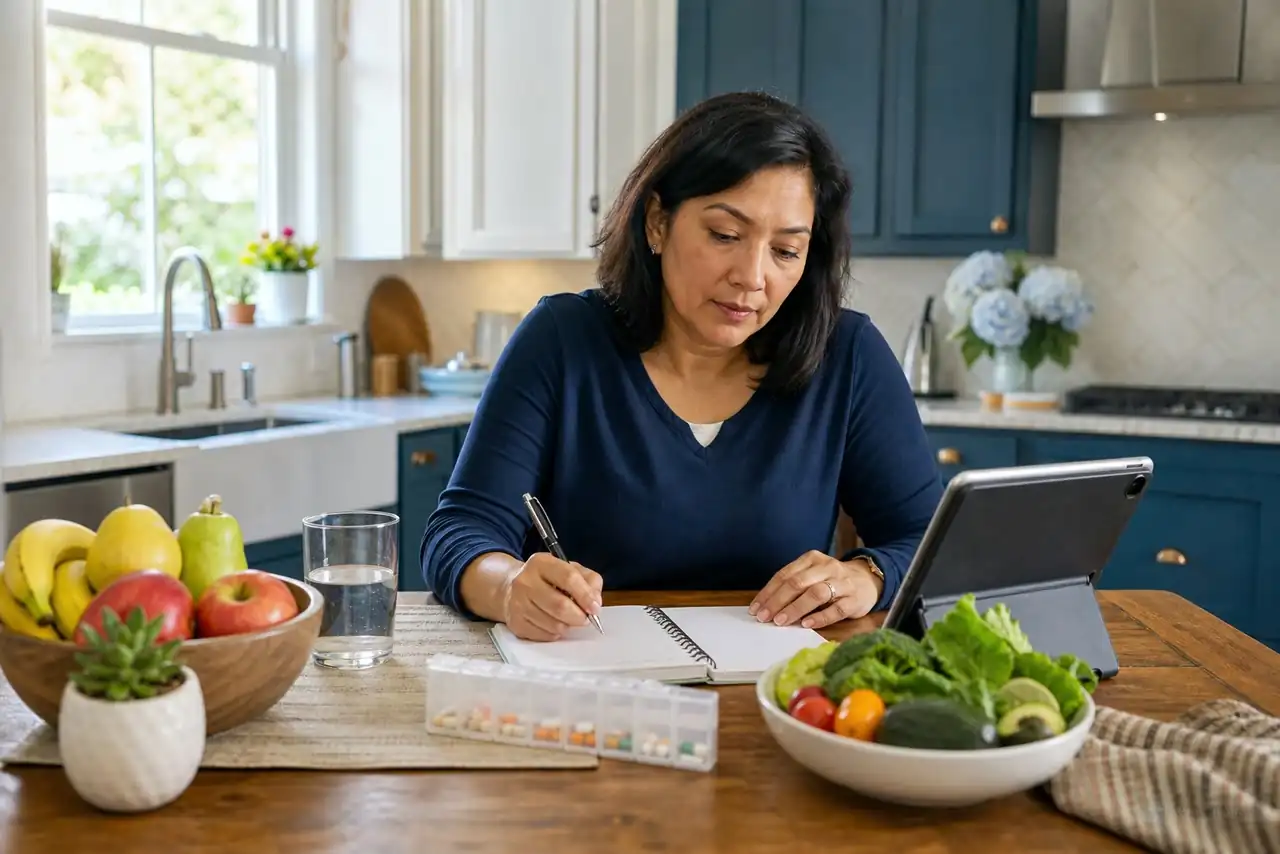
For the DASH eating pattern and blood-pressure planning, a clinician may consider a food pattern that emphasizes vegetables, fruits, whole grains, beans, nuts, lean proteins, and lower-sodium choices while fitting medicines, culture, budget, kidney health, and personal goals. They can help set a realistic target, decide whether testing or in-person assessment is needed, review medication safety, and identify whether a specialist, dietitian, physical therapist, counselor, or other resource would add value.
A careful evaluation usually begins with pattern recognition, then tests the pattern against the person’s history and risk factors. This may mean clarifying dates, reviewing records, asking for a home reading, arranging a physical examination, or coordinating an outside service. It can also mean explaining why a particular test, prescription, procedure, or setting is not the safest next step.
Good primary care also includes follow-through. Ask who will review a result, how you will receive instructions, what needs repeat testing or monitoring, and how an outside referral or prescription question will be coordinated. Do not assume that an order, referral, or message automatically resolves insurance-network or scheduling requirements.
Where telehealth fits, and where it does not
Telehealth can help with selected history-taking, follow-up, medication and lifestyle discussions, result review, visible symptoms when secure images are appropriate, and triage for non-emergency concerns. HHS advises patients to prepare for a private visit, use the official platform, and bring questions, medicines, and relevant information. HHS: What to Know Before a Telehealth Visit offers patient preparation guidance.
Telehealth has limits. A clinician may need palpation, vital signs, an ear, throat, eye, skin, joint, neurologic, abdominal, pelvic, or wound examination, testing, imaging, a procedure, or immediate treatment. When that is true, an in-person office, urgent-care center, emergency department, laboratory, imaging facility, or specialist may be the correct next setting.
WheelHouse can discuss appropriate primary-care next steps and ongoing prevention support within its current model. The article is educational and cannot determine what is safe or effective for an individual.

When urgent or emergency care is safer
Seek urgent or emergency help for chest pain, stroke-like symptoms, serious shortness of breath, fainting, a very high blood-pressure reading with concerning symptoms, or another possible emergency. Do not use a prevention or lifestyle article to delay evaluation of a dangerous symptom.
A remote article cannot assess severity, vital signs, appearance, or the speed of decline. If a person looks very ill, symptoms are escalating, or you are worried about a possible emergency, err toward immediate evaluation. Emergency care should not be delayed while waiting for a portal reply, an insurance answer, an image review, or a membership enrollment conversation.
What to track and bring to the appointment
Track the specific pattern that matters for this topic: symptoms, home readings when advised, food or activity timing, sleep, medicine changes, triggers, and functional impact. Bring the record, plus a current medication list and questions, to the appointment.
Use a short, factual record: dates, symptom changes, medicines, allergies, readings, photos only when requested through a secure route, prior diagnoses, recent visits, and your goal for the appointment. If another person helps with care, agree in advance about what information may be shared and who will be present. Keep emergency contacts and the preferred pharmacy current.
Questions this guide can help you ask
- Told to ‘watch your diet’ with no specifics? Use this as a prompt for a current, individualized answer rather than an assumption about eligibility, diagnosis, or coverage.
- Curious what the DASH diet actually involves? Use this as a prompt for a current, individualized answer rather than an assumption about eligibility, diagnosis, or coverage.
- Want realistic food swaps, not a full overhaul? Use this as a prompt for a current, individualized answer rather than an assumption about eligibility, diagnosis, or coverage.
- Wondering how much diet can move your numbers? Use this as a prompt for a current, individualized answer rather than an assumption about eligibility, diagnosis, or coverage.
- Need help pairing diet with medication? Use this as a prompt for a current, individualized answer rather than an assumption about eligibility, diagnosis, or coverage.
- Ready to build a blood pressure plan with WheelHouse Health? Use this as a prompt for a current, individualized answer rather than an assumption about eligibility, diagnosis, or coverage.
A current answer from the right source is more valuable than a broad online claim. WheelHouse can confirm its own services and care process; other organizations control their own coverage, pricing, benefit, tax, and referral rules.
Make the next step specific
Before the conversation ends, repeat back the plan in plain language: what is most likely being addressed, what you will do today, what information is still needed, who is responsible for each next step, and what symptom or deadline changes the plan. This is especially important for the DASH eating pattern and blood-pressure planning, where a general search result can otherwise feel more certain than it is.
Save any instructions, test orders, medication changes, referral details, or current plan confirmation in one place. A good record makes it easier to follow through and makes the next conversation more accurate.
Before you act
- Use the current WheelHouse page and ask the practice to confirm any service, price, eligibility, or availability detail that affects your decision.
- Keep major medical coverage, pharmacy, specialist, laboratory, imaging, urgent-care, and emergency-care questions separate from a membership-access question.
- Get urgent or emergency care for warning signs rather than waiting for routine telehealth or a message response.
Frequently asked questions
What is the safest first step for dash diet lower blood pressure?
Start by identifying the symptom or decision you actually need to make, then gather the relevant timeline, medication list, readings, records, and questions. Use a current clinical conversation for individualized advice rather than treating a search result as a diagnosis or service guarantee.
Can WheelHouse Health help through telehealth?
WheelHouse can explain its current services and assess appropriate non-emergency primary-care concerns within its model. Whether telehealth is suitable depends on the problem, the need for an examination or testing, the patient’s location, and clinical judgment.
When is an in-person visit better?
An in-person evaluation may be better when a hands-on exam, testing, procedure, imaging, urgent assessment, or specialty evaluation is needed. The care team can help direct the next step, but worsening or severe symptoms should not wait for a routine appointment.
What should I prepare before I ask about the DASH eating pattern and blood-pressure planning?
Prepare the dates and pattern, what has changed, medicines and supplements, allergies, recent records or test results, relevant photos or readings when requested, and the exact question you want answered. A concise prepared history helps the clinician choose a safer next step.
What symptoms mean I should seek urgent or emergency help?
Seek urgent or emergency help for chest pain, stroke-like symptoms, serious shortness of breath, fainting, a very high blood-pressure reading with concerning symptoms, or another possible emergency. Do not use a prevention or lifestyle article to delay evaluation of a dangerous symptom. If you are unsure whether a symptom is an emergency, use emergency services rather than waiting for a message or telehealth response.
Get a current answer from WheelHouse Health
For a current discussion about dash diet lower blood pressure, bring your location, main question, symptom or decision timeline, current plan details, and any relevant records. WheelHouse can explain its available primary-care options and help determine the appropriate next step.