
Virtual
Start with telehealth
Useful when the concern can be assessed safely from your history, visible findings, reliable home readings, and records.
Virtual, in-person, and home-based care
Start with the service that best matches your concern. If you are unsure, WheelHouse Health can help determine whether telehealth, an in-person visit, home-based care, or another setting is more appropriate.

Five ways to get support
Every service explains what fits virtually, what may need hands-on care, and when a faster setting is safer.

Secure visits for current concerns, medication questions, lab review, preventive planning, and follow-up.

Evaluation and ongoing support for chronic, complex, or slow-healing wounds, including eligible home-based care.

Practical monitoring and follow-up for blood pressure, diabetes, cholesterol, asthma/COPD, thyroid conditions, and more.

Selected outpatient assessment, wound care, testing, and follow-up for eligible Northern Virginia patients.
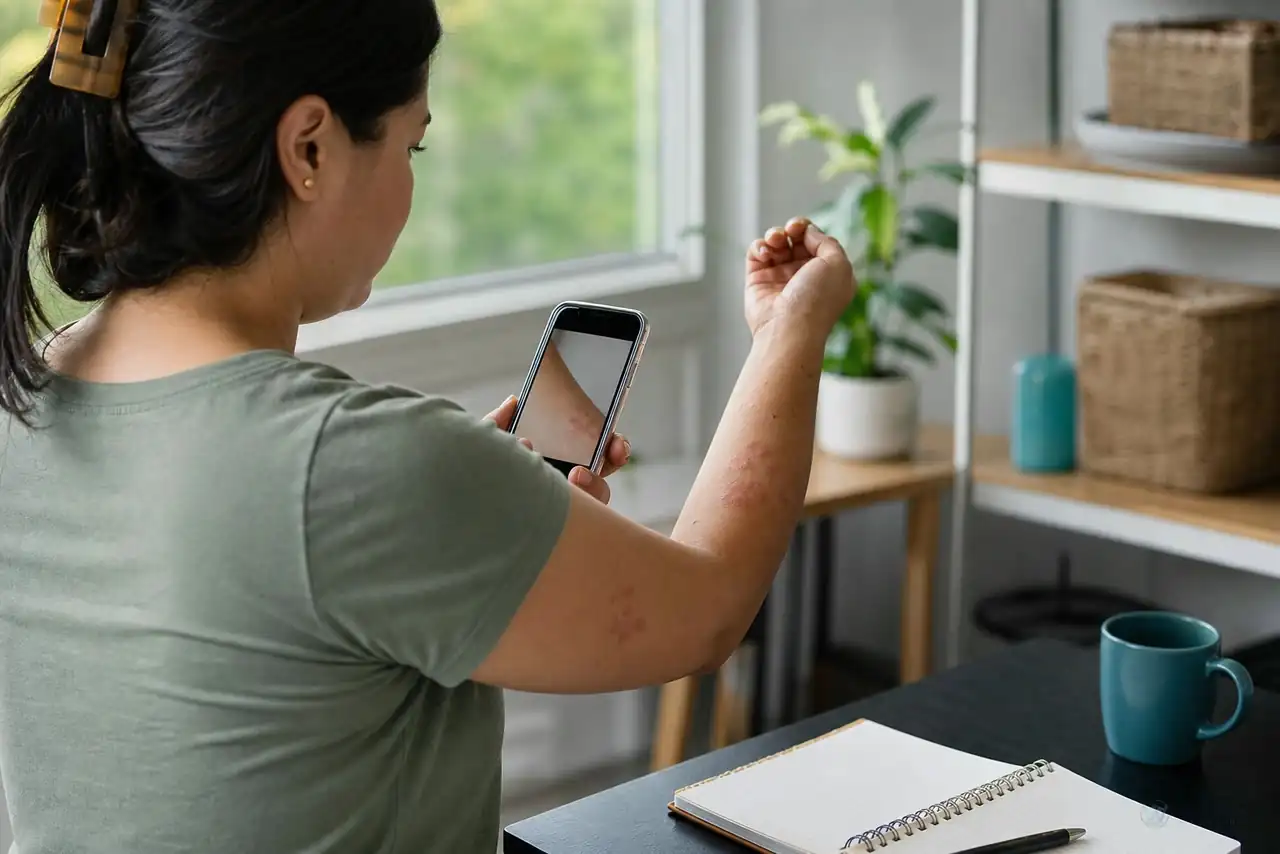
Evaluation and treatment planning for acne, eczema, rashes, irritation, and selected skin concerns by telehealth or in person.
Choose the right setting
Useful when the concern can be assessed safely from your history, visible findings, reliable home readings, and records.
Better when examination, measurement, specimen collection, a procedure, or other direct assessment is needed.
Severe, rapidly worsening, or potentially life-threatening symptoms should not wait for a routine appointment.
Payment and prescribing
Eligible prescriptions may be sent electronically when clinically appropriate and legally permitted. Prescription decisions depend on the diagnosis, medical history, current medications, safety considerations, and whether an in-person assessment or monitoring is required.
WheelHouse Health uses direct-pay and direct-membership pricing rather than billing insurance for those services. Membership is not health insurance. Labs, imaging, medications, specialists, and outside services may involve separate charges.
Complete care guide
Virtual primary care, chronic-care follow-up, wound care, skin-health evaluation, and selected in-home visits each solve a different part of the care journey. This guide helps you choose a starting point without assuming that one setting fits every concern.
Use the contents list to move directly to the question or decision that matters to you.



Start with purpose
Healthcare choices can feel harder when every page sounds as though it handles everything. A clearer comparison begins with the work the visit needs to do. Do you need a conversation and records review? Do you need direct measurement, touch, testing, or a procedure? Are you following an established issue over time, or is something changing quickly? Is travel itself a barrier? The answers shape which setting is reasonable.
WheelHouse Health groups care into five practical paths. Telehealth supports selected non-emergency concerns and follow-up. Chronic care organizes symptoms, readings, medication questions, and monitoring across time. Wound care considers the wound and the health factors that influence healing. Skin-health care evaluates selected common concerns while identifying when direct or specialty assessment is needed. In-home visits bring selected outpatient services to eligible locations when the necessary care can be provided safely there.
These categories are starting points, not promises. A request may be redirected after the history is reviewed. A virtual visit can lead to an in-person examination; a wound concern can require a specialty center; a home request can require a better-equipped facility. For a possible emergency, skip routine scheduling and call 911 or seek immediate emergency care.
If more than one service appears relevant, begin with the concern that needs the earliest decision. A patient managing diabetes who also has a new foot wound, for example, should not assume that a routine chronic-care slot answers the wound question. A person asking about a skin change after a medication may need both a focused assessment and medication review. The booking label organizes the request; it does not prevent the clinician from considering connected information or recommending a more suitable route.
Ask what information or action is necessary for a safe decision. The easiest setting is useful only when it can support the care you need.
Service 01
Telehealth can be a practical starting point for selected non-emergency symptoms, medication discussions, lab or test review, preventive planning, and follow-up. The visit still involves clinical judgment. The clinician considers the timeline, associated symptoms, relevant history, medications, allergies, visible findings, home readings, and the limits of what can be assessed remotely.
A camera and conversation cannot replace every examination. Some concerns require reliable vital signs, palpation, listening with clinical equipment, specimen collection, imaging, point-of-care testing, or a procedure. If those missing pieces could change the decision, the clinician may recommend in-person care before offering a diagnosis or treatment plan. Technical quality, privacy, patient identity, and the patient’s physical location at the time of the visit also affect whether telehealth can proceed.
Use virtual primary care when your main need can reasonably begin with discussion and review, and remain open to a change in setting. Prepare medications, allergies, a symptom timeline, relevant records, and requested readings. A visit does not guarantee a prescription or refill. Prescribing requires an adequate evaluation, clinical appropriateness, required monitoring, and compliance with applicable law.
Service 02
Long-term conditions are often managed through many small decisions rather than one dramatic visit. The useful questions are whether symptoms are stable, readings show a meaningful pattern, medications are helping, monitoring is current, and the plan still fits the person’s daily life. Chronic-care appointments create space to connect those pieces instead of treating each refill or laboratory result as an isolated task.
Virtual follow-up may work when reliable home information and appropriate records are available. In-person assessment remains important when a physical finding, new symptom, test, procedure, or medication-monitoring requirement cannot be handled remotely. The right interval and setting depend on the condition, current control, treatment, other health needs, and clinician judgment; a generic website schedule cannot determine it for an individual patient.
This service may be a fit when you need help organizing blood-pressure or glucose trends, reviewing laboratory results, reconciling medications, planning preventive needs, or deciding what should happen before the next follow-up. Bring the complete list of clinicians and treatments involved. If symptoms are severe, new, or rapidly worsening, routine chronic-care scheduling may not be the appropriate path.
Service 03
A wound is affected by more than the dressing on top of it. Its cause, depth, location, pressure, drainage, surrounding skin, pain, circulation, sensation, mobility, nutrition, medications, diabetes, and prior care may all influence what happens next. A useful wound assessment looks for healing progress, barriers, complication concerns, and whether another service or setting is needed.
Hands-on evaluation is often important because photographs can distort size and color and cannot show temperature, tenderness, tissue texture, odor, circulation, undermining, or depth reliably. Telehealth may support selected follow-up questions, caregiver education, or review of an image sent through the designated clinical system. It should not be presented as a complete wound assessment when direct information is necessary.
Selected outpatient wound services may be available in person or at an eligible Northern Virginia location, depending on the request, address, stability, supplies, required procedure, and current schedule. Some wounds require vascular evaluation, imaging, hospital care, surgery, infection treatment, podiatry, or a specialty wound center. Increasing pain, spreading redness, worsening drainage, fever, tissue discoloration, or rapid deterioration should prompt timely clinical assessment rather than waiting for a routine website response.
Service 04
A home visit can be useful when mobility, transportation, caregiving demands, or the need to observe the living environment makes clinic travel difficult. It can also provide direct information that a video visit cannot, such as selected vital signs, physical findings, wound details, medication containers, mobility context, and caregiver technique. The value comes from matching a hands-on need with a setting that can support it safely.
Home-based care has limits. It does not bring hospital-level testing, imaging, emergency treatment, continuous monitoring, or every procedure into the home. A request may be redirected when the equipment, staffing, privacy, space, infection-control conditions, or clinical urgency calls for another setting. Home visits are intended for eligible, stable outpatient needs, not as an alternative to 911, an emergency department, or urgent care when immediate evaluation is required.
Availability varies by address, visit type, clinical need, current schedule, and whether the patient and environment are appropriate for the service. Share only the minimum administrative location information requested through the approved scheduling channel. The practice can then confirm whether a home visit is offered for that area and concern, whether another service should come first, and what to prepare.
Service 05
Skin concerns depend on both appearance and history. Timing, itch, pain, drainage, fever, exposure, products, medications, prior episodes, treatment attempts, and the way a change has evolved can all matter. Selected acne, eczema, dermatitis, rash, irritation, and follow-up concerns may be appropriate for primary-care evaluation when the available information supports a safe decision.
Telehealth can help when the area can be seen adequately and the history is clear, but screen color, lighting, focus, scale, skin tone, depth, texture, warmth, and tenderness are difficult to judge remotely. Images should be sent only through a method designated by the practice. A photograph can supplement a clinical history; it does not provide dermoscopy, palpation, biopsy, pathology, or a complete skin examination.
New, changing, bleeding, irregular, deeply painful, widespread, blistering, or rapidly worsening concerns may require prompt in-person or specialty evaluation. The practice may recommend urgent care, a dermatologist, testing, or a procedure when primary-care assessment is not enough. The service is described as skin-health care to keep that boundary clear; it should not be interpreted as a claim that dermatologist services are being provided.
What may happen after the visit
A healthcare service should not be judged only by whether it produces a prescription. Medication may be appropriate after an adequate evaluation, but some requests require previous records, current measurements, laboratory monitoring, direct examination, or care from a clinician with a different scope. Some medications are not appropriate for remote prescribing, and applicable state and federal requirements still apply to telehealth.
Testing is similar. The clinician may need a complete outside report, may recommend new laboratory work or imaging, or may ask the original ordering clinician to address a result. WheelHouse Health does not control the price, insurance participation, turnaround time, or scheduling of independent laboratories, pharmacies, imaging centers, specialists, or facilities. Ask each outside organization about its own costs and policies.
A referral is not a failed visit. It is often the safest result when a question needs equipment, procedures, specialty judgment, emergency resources, or longitudinal responsibility outside the practice. Before leaving, clarify the reason for the next step, how quickly it should occur, what information should travel with you, and who will review the outcome.
No service category guarantees a diagnosis, prescription, refill, test, referral acceptance, appointment time, or clinical outcome.
Plan for costs
WheelHouse Health uses direct-pay and membership pricing for its own services rather than presenting membership as insurance. Direct-pay can fit an occasional need. Membership may fit someone who expects recurring visits, follow-up, or a particular mix of virtual and selected hands-on access. The better choice depends on likely use and the current agreement, not a universal savings claim.
A membership does not replace coverage for emergency care, hospital services, outside specialists, imaging, pharmacy costs, outside laboratory work, or other services not included in the plan. Before enrolling, review eligibility, included visit types, visit limits, messaging and response boundaries, home-visit geography, additional fees, recurring charges, renewal, cancellation, refund rules, and the way plan changes are handled.
Public plan cards are a comparison aid. The plan-specific written agreement presented before enrollment is the controlling source for current terms. If a benefit matters to your decision, such as a home visit, a family member’s eligibility, or a particular type of communication, ask where it appears in that agreement. Avoid sending clinical details while making an administrative pricing inquiry.
Make the next move
Choose telehealth when a non-emergency concern can reasonably begin with history, conversation, visible information, and available readings or records. Choose chronic care when the main work is connecting trends, medication questions, monitoring, and follow-up. Ask about wound or skin-health care when direct observation, progress review, or a focused plan is needed. Ask about an in-home visit when travel is a barrier and the requested outpatient care may be safely provided at the location.
If you are uncertain, book or contact the practice for administrative guidance using the closest category. Do not place symptoms, clinical photographs, diagnoses, medication lists, or records in ordinary email or public website channels. Use the designated patient or intake system when instructed. Eligibility is confirmed according to the patient’s physical location, clinician authorization, clinical need, setting, and current availability.
Severe or rapidly worsening symptoms should not wait for a routine response. Call 911 or seek immediate emergency care for a possible emergency. Otherwise, prepare one main goal, your current medications and allergies, relevant records, a short timeline, and requested home readings. The most useful service is the one that helps reach a safe decision and makes the next step clear.
Choose the service closest to your main concern. The visit format may change when the information needed for safe care becomes clear.
Start here