
WheelHouse Health | Northern Virginia Concierge Care
Wound Healing Stages What Normal Healing Looks Like
A source-led WheelHouse Health guide to stages of wound healing, including practical preparation, care-setting boundaries, and questions to take to a clinician.
Written by WheelHouse Health Editorial Team | Clinical review: WheelHouse Health Clinical Team | Updated 2026-07-28

Key decision points
| Topic | What to know |
|---|---|
| What this guide does | Explains the decision points, preparation steps, and care-setting boundaries relevant to Stages of Wound Healing. |
| What it cannot do | Diagnose a person, confirm a service is available, replace an examination, or override individualized clinical advice. |
| What changes the plan | Symptom severity, timing, medical history, medicines, pregnancy status when relevant, location, and available examination or testing. |
| When not to wait | chest pain, serious breathing difficulty, stroke signs, severe bleeding, a rapidly worsening wound, or another possible emergency. A worsening wound or severe symptom should not wait for a routine telehealth message. |
| WheelHouse Health’s role | WheelHouse can advise on appropriate next steps within its service model and may coordinate in-home or other care when available and clinically appropriate. Wounds, circulation issues, and device readings may require a different level of care. |
Understanding Stages of Wound Healing
Stages of Wound Healing needs a practical but cautious approach. The right next step depends on the person’s symptoms, wound or device context, circulation, diabetes status, medicines, ability to inspect the area, and whether the condition is improving or worsening. A photo or home reading can assist a clinician, but it does not settle the cause on its own.
MedlinePlus notes that leg-ulcer and wound care depends on the underlying cause; for example, compression for venous ulcers should follow clinician guidance. A wound guide should not encourage a reader to self-diagnose circulation or infection problems. See MedlinePlus: Venous Ulcer Self-Care for the underlying patient-facing reference or current practice information.
The useful search-intent answer is not a promise or a diagnosis. It is a clear explanation of what information changes the decision, which parts can be addressed remotely, and which parts must be confirmed with a clinician, insurer, pharmacy, laboratory, employer, or another organization.
Build a practical plan before making a decision
Follow the existing clinician instructions first, keep a simple dated record, and avoid changing multiple products or techniques at once. Protect the area from further injury, use clean supplies as directed, and do not cut, debride, apply compression, or use strong chemicals without professional guidance. If the person has diabetes, poor circulation, immune suppression, or limited mobility, escalate concerns early.
Separate facts from assumptions. Facts include the timing of symptoms, the exact medication or test result, the current membership terms, and a documented insurance or employer answer. Assumptions include a diagnosis from a photo, a coverage promise based on a different plan, or an expectation that a virtual visit can replace every in-person service.
If the issue is not urgent, write down the decision you need by the end of the visit. For example: whether an examination is needed, which test or record matters, how to use a medicine safely, what a current plan includes, or what change should trigger a faster evaluation. That makes the appointment more useful and reduces avoidable back-and-forth.
How a clinician may work through the question
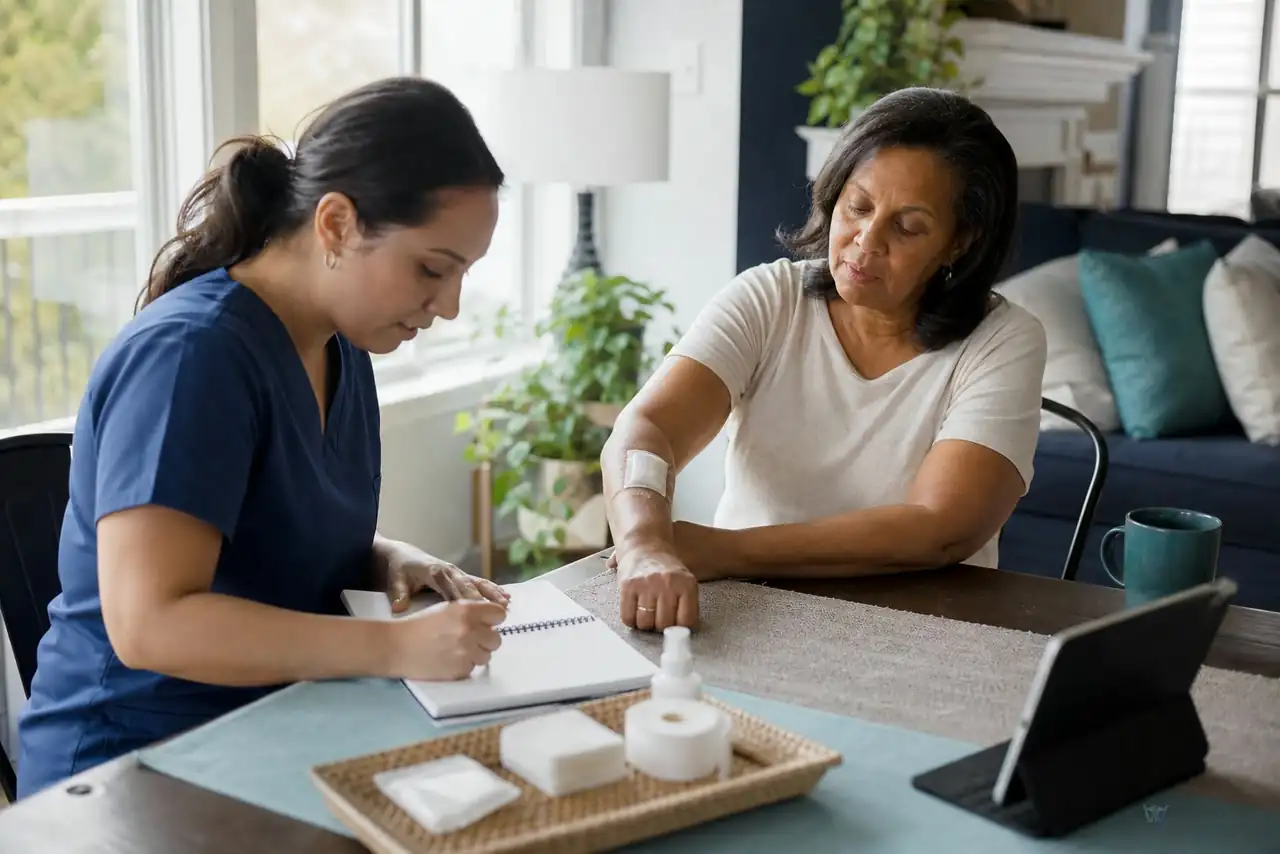
For Stages of Wound Healing, a clinician may consider the person’s symptoms, device technique, underlying health conditions, and clinician-guided follow-up. The plan can include an in-person examination, measurement, photo review through a secure platform, dressing or device instruction, medication review, vascular or specialty referral, home-care coordination, urgent care, or emergency treatment.
A careful evaluation usually begins with pattern recognition, then tests the pattern against the person’s history and risk factors. This may mean clarifying dates, reviewing records, asking for a home reading, arranging a physical examination, or coordinating an outside service. It can also mean explaining why a particular test, prescription, procedure, or setting is not the safest next step.
Good primary care also includes follow-through. Ask who will review a result, how you will receive instructions, what needs repeat testing or monitoring, and how an outside referral or prescription question will be coordinated. Do not assume that an order, referral, or message automatically resolves insurance-network or scheduling requirements.
Where telehealth fits, and where it does not
Telehealth can help with selected history-taking, follow-up, medication and lifestyle discussions, result review, visible symptoms when secure images are appropriate, and triage for non-emergency concerns. HHS advises patients to prepare for a private visit, use the official platform, and bring questions, medicines, and relevant information. HHS: What to Know Before a Telehealth Visit offers patient preparation guidance.
Telehealth has limits. A clinician may need palpation, vital signs, an ear, throat, eye, skin, joint, neurologic, abdominal, pelvic, or wound examination, testing, imaging, a procedure, or immediate treatment. When that is true, an in-person office, urgent-care center, emergency department, laboratory, imaging facility, or specialist may be the correct next setting.
WheelHouse can advise on appropriate next steps within its service model and may coordinate in-home or other care when available and clinically appropriate. Wounds, circulation issues, and device readings may require a different level of care.

When urgent or emergency care is safer
Seek urgent or emergency care for chest pain, serious breathing difficulty, stroke signs, severe bleeding, a rapidly worsening wound, or another possible emergency. A worsening wound or severe symptom should not wait for a routine telehealth message.
A remote article cannot assess severity, vital signs, appearance, or the speed of decline. If a person looks very ill, symptoms are escalating, or you are worried about a possible emergency, err toward immediate evaluation. Emergency care should not be delayed while waiting for a portal reply, an insurance answer, an image review, or a membership enrollment conversation.
What to track and bring to the appointment
Record the date, location, size or depth if a clinician has shown you how to measure it, drainage, odor, pain, redness, swelling, temperature, dressing changes, pressure or device use, glucose or blood-pressure readings when relevant, and any new symptom. Bring the current supply list and prior wound-care instructions.
Use a short, factual record: dates, symptom changes, medicines, allergies, readings, photos only when requested through a secure route, prior diagnoses, recent visits, and your goal for the appointment. If another person helps with care, agree in advance about what information may be shared and who will be present. Keep emergency contacts and the preferred pharmacy current.
Questions this guide can help you ask
- Confused about wound healing stages? Use this as a prompt for a current, individualized answer rather than an assumption about eligibility, diagnosis, or coverage.
- Want evidence-based guidance, not internet noise? Use this as a prompt for a current, individualized answer rather than an assumption about eligibility, diagnosis, or coverage.
- Wondering when to handle it at home vs see a provider? Use this as a prompt for a current, individualized answer rather than an assumption about eligibility, diagnosis, or coverage.
- Need a plan tailored to your history? Use this as a prompt for a current, individualized answer rather than an assumption about eligibility, diagnosis, or coverage.
- Want a provider one secure message away? Use this as a prompt for a current, individualized answer rather than an assumption about eligibility, diagnosis, or coverage.
- Ready to get clarity with WheelHouse Health? Use this as a prompt for a current, individualized answer rather than an assumption about eligibility, diagnosis, or coverage.
A current answer from the right source is more valuable than a broad online claim. WheelHouse can confirm its own services and care process; other organizations control their own coverage, pricing, benefit, tax, and referral rules.
Make the next step specific
Before the conversation ends, repeat back the plan in plain language: what is most likely being addressed, what you will do today, what information is still needed, who is responsible for each next step, and what symptom or deadline changes the plan. This is especially important for Stages of Wound Healing, where a general search result can otherwise feel more certain than it is.
Save any instructions, test orders, medication changes, referral details, or current plan confirmation in one place. A good record makes it easier to follow through and makes the next conversation more accurate.
Before you act
- Use the current WheelHouse page and ask the practice to confirm any service, price, eligibility, or availability detail that affects your decision.
- Keep major medical coverage, pharmacy, specialist, laboratory, imaging, urgent-care, and emergency-care questions separate from a membership-access question.
- Get urgent or emergency care for warning signs rather than waiting for routine telehealth or a message response.
Frequently asked questions
What is the safest first step for stages of wound healing?
Start by identifying the symptom or decision you actually need to make, then gather the relevant timeline, medication list, readings, records, and questions. Use a current clinical conversation for individualized advice rather than treating a search result as a diagnosis or service guarantee.
Can WheelHouse Health help through telehealth?
WheelHouse can explain its current services and assess appropriate non-emergency primary-care concerns within its model. Whether telehealth is suitable depends on the problem, the need for an examination or testing, the patient’s location, and clinical judgment.
When is an in-person visit better?
An in-person evaluation may be better when a hands-on exam, testing, procedure, imaging, urgent assessment, or specialty evaluation is needed. The care team can help direct the next step, but worsening or severe symptoms should not wait for a routine appointment.
What should I prepare before I ask about Stages of Wound Healing?
Prepare the dates and pattern, what has changed, medicines and supplements, allergies, recent records or test results, relevant photos or readings when requested, and the exact question you want answered. A concise prepared history helps the clinician choose a safer next step.
What symptoms mean I should seek urgent or emergency help?
Seek urgent or emergency care for chest pain, serious breathing difficulty, stroke signs, severe bleeding, a rapidly worsening wound, or another possible emergency. A worsening wound or severe symptom should not wait for a routine telehealth message. If you are unsure whether a symptom is an emergency, use emergency services rather than waiting for a message or telehealth response.
Get a current answer from WheelHouse Health
For a current discussion about stages of wound healing, bring your location, main question, symptom or decision timeline, current plan details, and any relevant records. WheelHouse can explain its available primary-care options and help determine the appropriate next step.